01 · Simulation
Living ecology
Species, weather, metabolism, population, disease, territory, and extinction systems are expressed as C++ types plus YAML-backed configuration. The code keeps the simulation testable without a rendered scene.
I build playable worlds where ecology, weather, lineage, and player choice share one ruleset. This portfolio documents the Age of Eons work visible in this repository: native Unreal C++, deterministic simulation code, authored data, a local web portal, and the tools that connect them.
Age of Eons is an open-world prehistoric prototype. The strongest parts are the rules underneath the spectacle: server-authoritative creature state, deterministic ecology, and a toolchain that makes iteration inspectable.
Species, weather, metabolism, population, disease, territory, and extinction systems are expressed as C++ types plus YAML-backed configuration. The code keeps the simulation testable without a rendered scene.
Creature movement and combat use replicated, quantized state with server validation. The beta portal uses revocable sessions, CSRF protection, and separate reviewer and identity-operator authority.
Python and PowerShell tools build, verify, launch, capture, and audit the world. Local pages expose species, atlas, server, and beta concepts without pretending sample data is live telemetry.
The artifacts below are local proof. They describe implementation and recorded verification, not employment history, awards, or a shipped commercial game.
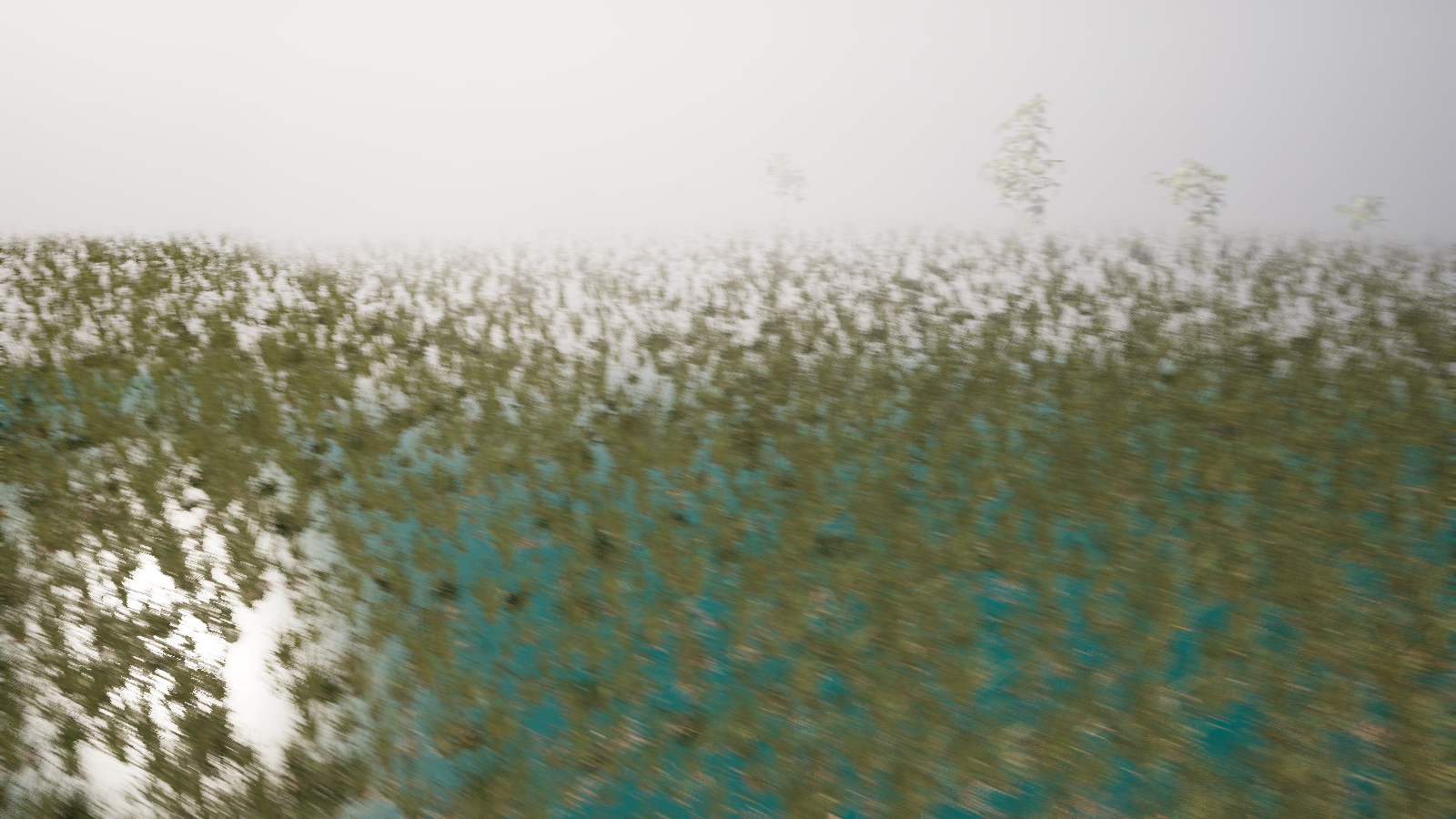
The Frontier pass combines procedural terrain, biome dressing, climate and creature systems into an Unreal world. The recorded verification says the ordinary game continued beyond map loading with 40 AI and regular autosave.
Built/tested: local Unreal capture and verification artifacts. Planned: production multiplayer release, public server operations, and final art polish.
Weather and ecology are seeded and advanced through bounded data models. Headless tests cover creature, ecology, registry, and world math paths so a visual pass does not become the only source of truth.
// same seed → same world inputs
FAoEWeatherSystem Weather;
Weather.Bind(Config, WorldSeed);
Weather.Advance(DeltaHours);
const auto& State = Weather.Current();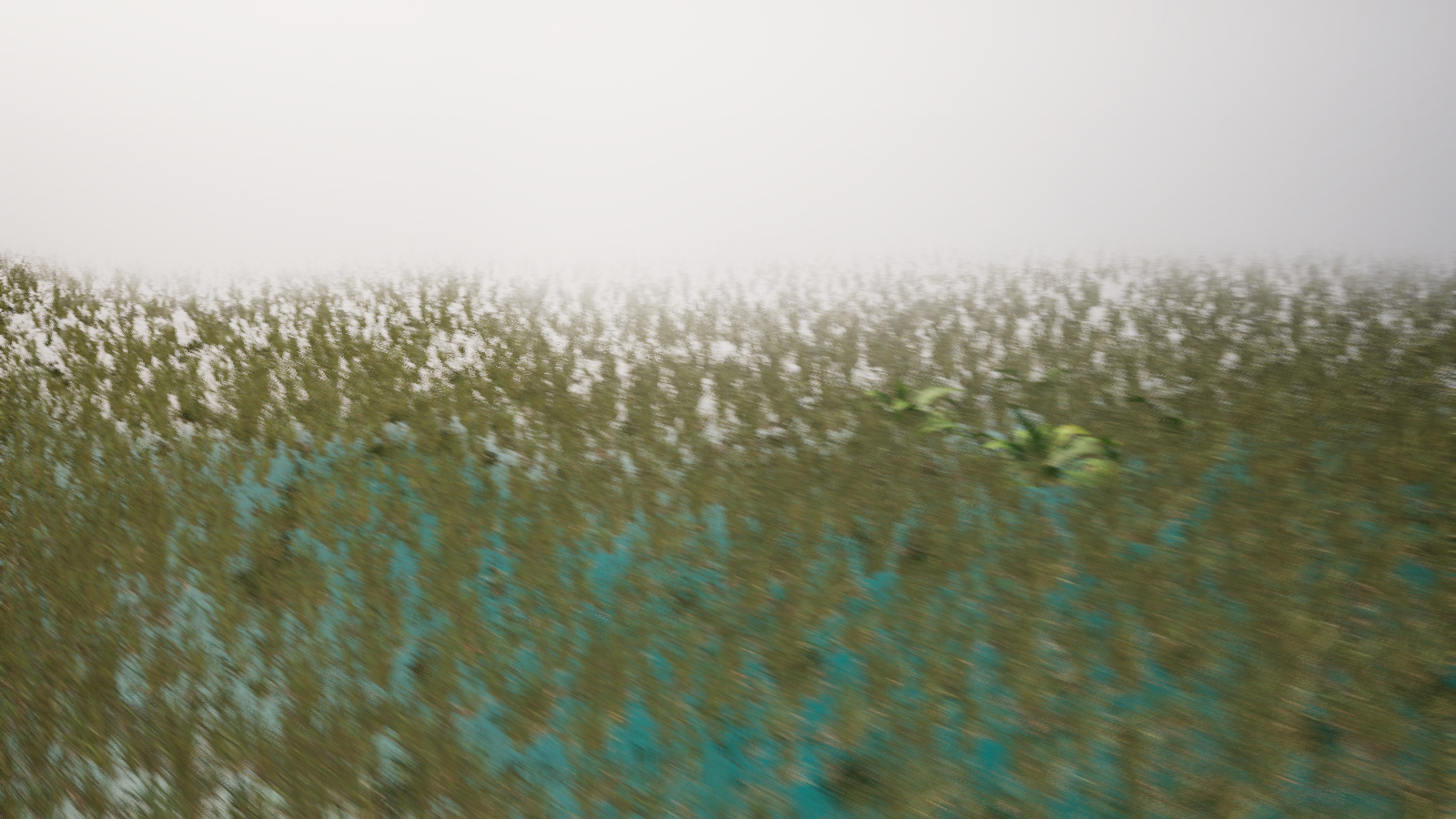
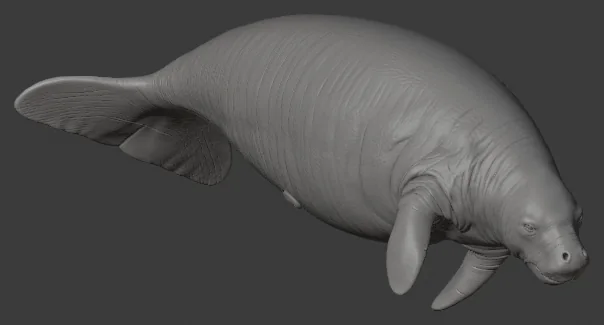
The sea cow file was supposed to hold one animal. It held two, stacked inside a single mesh, sharing one name and one skeleton — and so did almost everything else on the shelf. What follows is the work of pulling them apart, giving each one a skeleton fitted to its own anatomy, and proving the deformation instead of hoping for it.
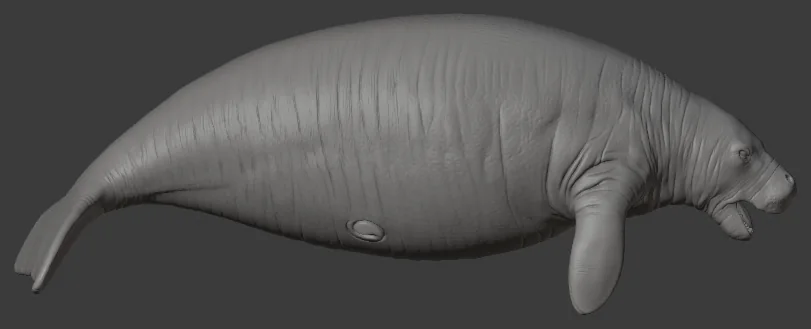
Two bones, left and right, pointing opposite directions on a long lever arm. Every bend of the tail ripped the plate down its own midline. A sirenian fluke is a single stiff plate with no independent left and right articulation, so both bones came out and the chain now runs straight through it. Damaged edges fell from 16,829 to 84.
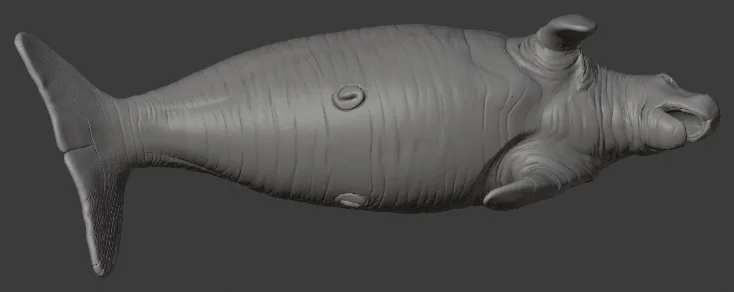
The flipper had a quieter version of the same fault. The first transition field measured only how far out along the limb a vertex sat — but the belly also sits below the shoulder, so the belly was being dragged along with it. Ten thousand of seventeen thousand damaged edges were nowhere near the flipper.
Built and tested: 25 static stress poses and 23 clips, every frame measured against rest, five camera angles. Planned: engine import, animation blueprint and playable wiring.
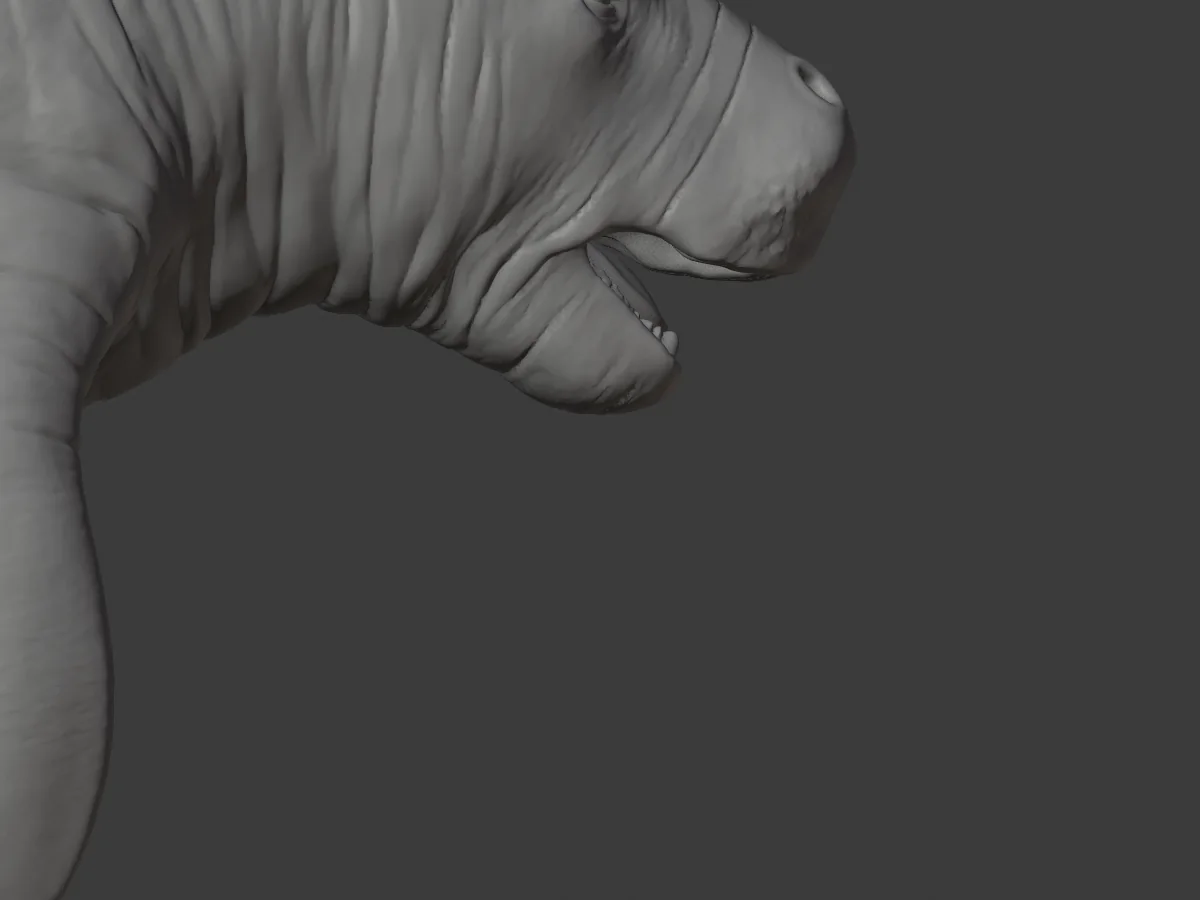
The reference notes listed continuous tooth replacement and tusks. That describes manatees and dugongs. Hydrodamalis gigas was completely toothless and ground kelp between rough keratinous plates — which is what Georg Steller wrote down in 1741, watching them off Bering Island. Five hundred and fifty-eight sculpted tooth vertices were relaxed back into the gum line and the plates were built in their place.
The mouth had no interior either — open the jaw and you saw straight through the skull. It now has an oral cavity, a tongue on three segments off the jaw, and an eye seated at the socket the skull actually has. The original placement sat forty centimetres too low, which is the entire reason it read as a crease.
Honest limitation: the blink is switched off. Five approaches to an eyelid each failed differently, and all for one reason — there is no socket recess and no lid edge loop for a lid to fold along. That is modelling work, and it is not finished.
A skeleton renamed eleven times is not eleven rigs. Limb layout comes from where each body actually meets the ground, so four contact points build a quadruped, two build a biped, and none builds something finned. The dragonfly gets six legs and four wings. The ichthyosaur gets an axial chain and steering paddles.
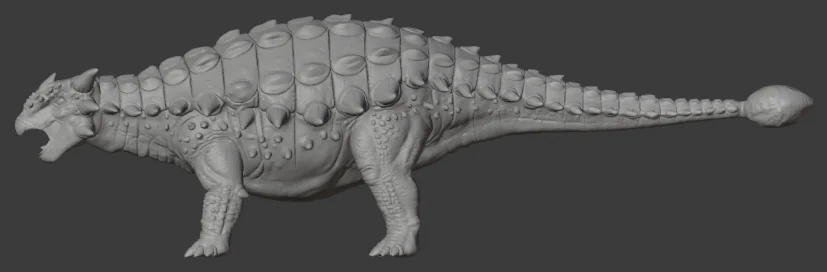
27 bones, 26 deform, four limbs from four ground contacts. Its tail club is wider than its skull, which broke the first method I tried for finding which end was the head.
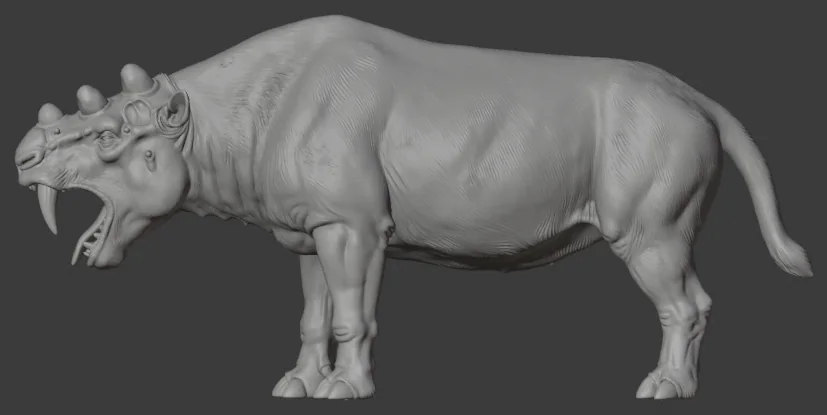
27 bones. Short tail and a long projecting head — the combination that broke the second method, and sent me to rendering every model and looking instead.
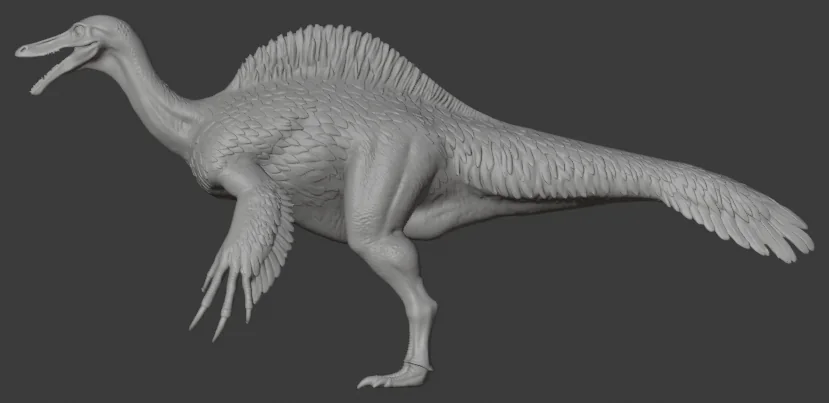
21 bones, bipedal. Two ground clusters instead of four, so the layout resolved to a biped without being told to.
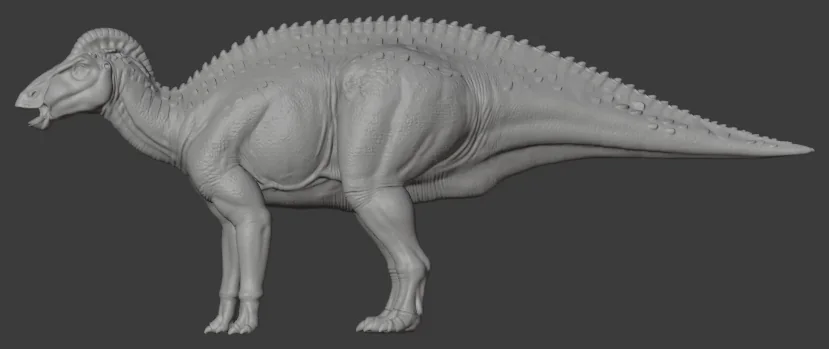
27 bones. Separated from a fused pair, oriented, and scaled from measured landmarks rather than a bounding box.
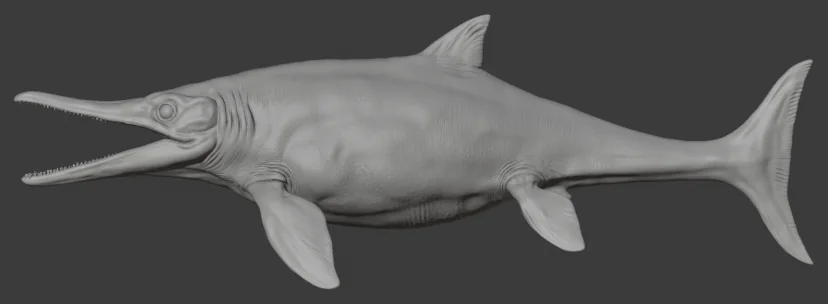
19 bones. No ground contact at all, which is itself the signal — an axial chain with steering paddles rather than legs.
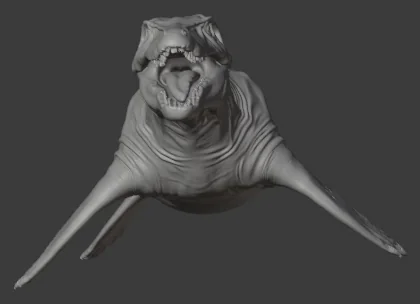
19 bones. Its body runs along a different axis to everything else on the shelf, caught and corrected before the skeleton was placed.
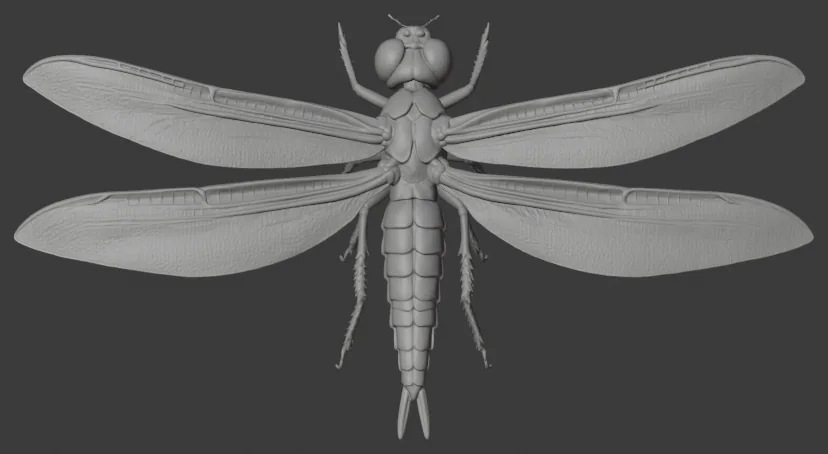
33 bones, six legs and four wings. Its longest axis is the wingspan, not the body — the first pass ran a spine straight down the wings.
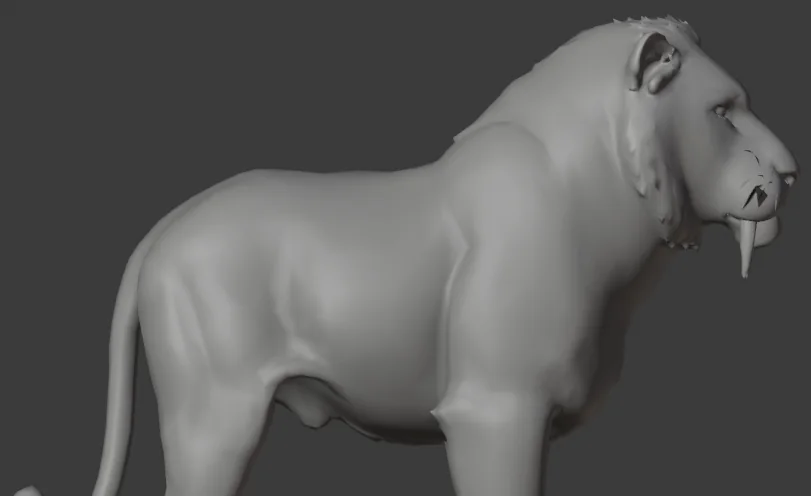
27 bones, feliform layout. Separated and filed with the rest of the hall.
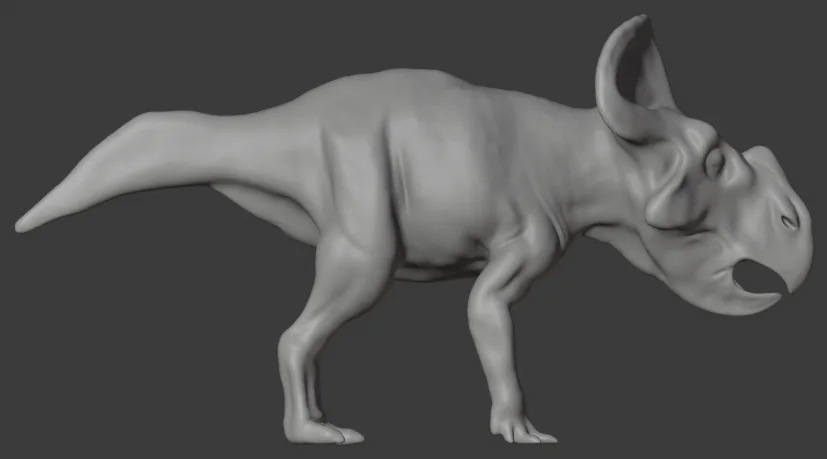
27 bones, ceratopsian. Four ground contacts, quadrupedal chain.
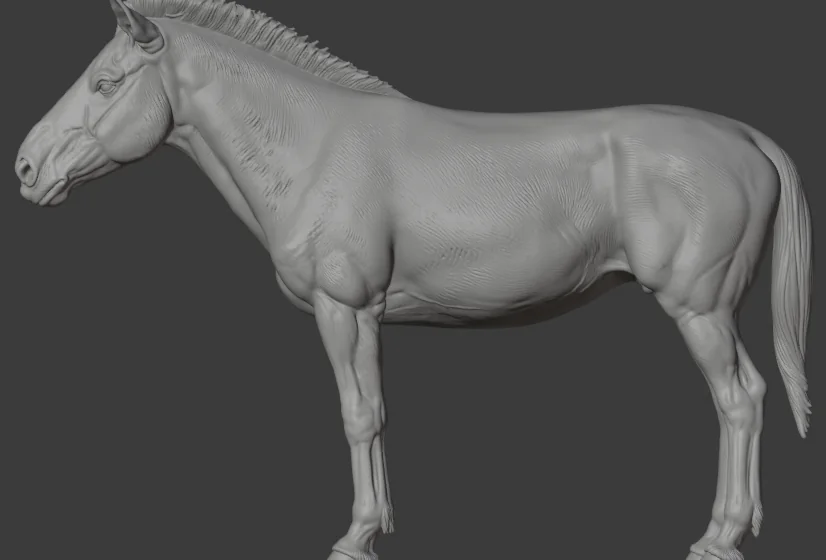
36 deform bones. Clears eighteen equine stress poses — graze, rear, gallop gather and extend, per-leg swings, neck turns, tail — with no failures.
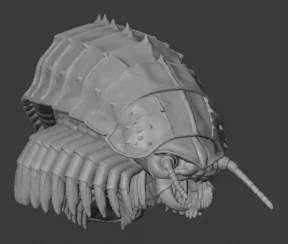
Segmented arthropod body, separated from a fused pair.
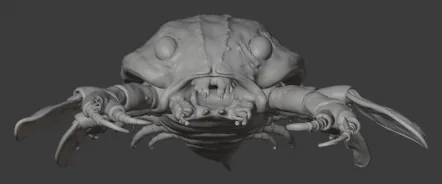
Segmented arthropod. One of several isopod forms recovered and filed separately.
Several tonnes of animal does not attack by opening its mouth. The weapon is mass. The ram coils, charges, lands chest-first, takes the shock through the whole body and settles slowly across 132 frames — and the contact frame is written to a notify map, so the damage window lands on the frame you can see rather than on a guessed delay.
At impact, the worst-scoring frame in the clip, 0.128% of edges are strained. Nothing tears.
Every pose is measured against rest — edge stretch, triangle collapse, inverted faces, vertices flying away from their own neighbourhood — and rendered from five angles. A rig that reads clean in profile can be torn open from underneath, and the ventral view is where flipper-root failure shows.
Distance-based weighting has no concept of a midline, so a left shoulder will happily take hold of right-side skin through the chest. A smooth lateral gate, reading the rig’s own convention off the data rather than assuming it, removed 174,008 cross-midline influences on one animal and 179,856 on the other. Both now sit at zero.
Where it stands: the sea cow is asset-ready and not yet in engine. Twenty-eight models are separated, named and filed; most are rigged and waiting on weights.
The Age of Eons work is an independent Unreal prototype and portfolio proof. It is not presented as an Alderon Games mod, approval, partnership, or released Path of Titans content.
Alderon’s current FAQ says Path of Titans modding is under private testing; people with prior modding experience can sign up through the official creator portal. The application guide says applicants must be at least 18, complete all application steps, and may need to accept an NDA. Access is not guaranteed.
My evidence here shows data-driven creature systems, native C++ gameplay code, world tools, material and lighting passes, and a testing habit. Path of Titans SDK work will begin if access is approved.
For an actual application, I would prepare a compact mod sample using the authorized Dev Kit, document original assets and permissions, and follow Alderon’s current portal and agreement requirements after access is granted.